SEO Monitoring
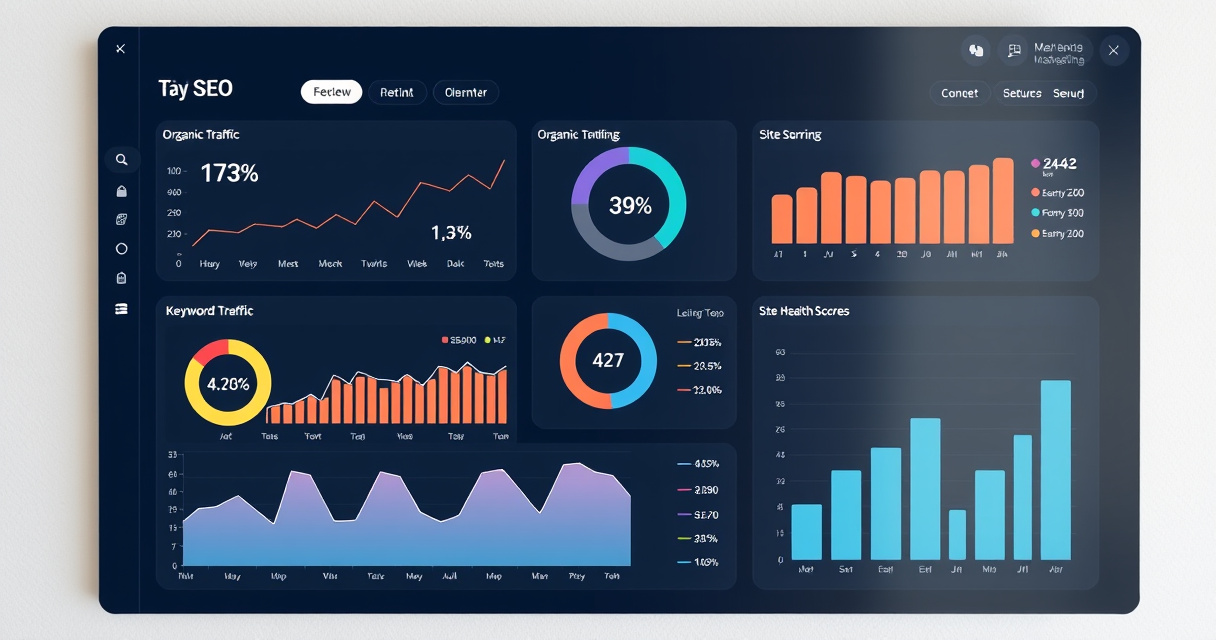
SEO monitoring is the ongoing tracking of search performance, technical health, and content changes to understand whether SEO efforts are improving organic visibility and results.
Key takeaways
- SEO monitoring is a continuous process, not a one-time audit.
- Track a balanced set of metrics: rankings, traffic, conversions, and technical health.
- Use Google Search Console and Google Analytics 4 as your core free tools.
- Set up alerts and schedule regular reviews to catch issues early.
- Document changes to understand what drives performance shifts.
SEO monitoring helps you detect ranking drops, traffic shifts, and technical issues before they become bigger losses.
Example: Monitoring a blog post after a content update
- You update a blog post targeting the keyword "best running shoes for flat feet."
- Before the update, the page ranks #12 and gets 50 organic visits per week.
- After the update, you monitor weekly:
- Rankings: Check position in Google Search Console (GSC) — moves from #12 to #8 in week 2.
- Traffic: In Google Analytics 4 (GA4), organic sessions increase to 120/week by week 4.
- CTR: GSC shows CTR improves from 2% to 4% as ranking improves.
- Technical health: Run a crawl to ensure no new broken links or slow-loading images.
- After 6 weeks, the page reaches #5 with 300 organic visits/week — you confirm the update was successful.
Quick start: Set up your SEO monitoring routine in 5 steps
- Connect your tools: Link Google Search Console and Google Analytics 4 to your site.
- Define your KPIs: Choose 3-5 key metrics — e.g., organic traffic, top 10 keyword count, CTR, conversion rate, index coverage.
- Create a dashboard: Use Looker Studio or a spreadsheet to visualize your KPIs weekly.
- Set up alerts: In GSC, enable email notifications for critical issues (e.g., manual actions, crawl errors). Use third-party tools for ranking drop alerts.
- Schedule reviews: Check your dashboard weekly for trends, and do a deeper analysis monthly.
How to judge if your monitoring is effective
- Data accuracy: Are your tools properly configured? Check for tracking code errors or missing permissions.
- KPI relevance: Do your metrics tie directly to business goals (e.g., leads, sales, ad revenue)?
- Actionability: Can you spot a problem and know what to fix? If not, refine your metrics.
- Cadence: Are you checking often enough to catch sudden drops? Weekly is a good baseline.
- Documentation: Do you log changes (e.g., content updates, technical fixes) to explain metric shifts?
Common SEO monitoring mistakes
- Treating it like a one-off audit: Monitoring is ongoing, not a quarterly check.
- Focusing only on rankings: Ignoring traffic, conversions, and technical health gives an incomplete picture.
- Tracking too many metrics: Without a clear KPI set, you lose focus on what matters.
- Ignoring alerts: Failing to act on ranking drops or crawl errors lets small issues grow.
- Not documenting changes: Without a change log, you can't connect cause and effect.
Next step
FAQ
What is SEO monitoring?
SEO monitoring is the continuous process of tracking a website's search performance, technical health, and content changes to evaluate the effectiveness of SEO strategies and identify opportunities for improvement.
What is the difference between SEO monitoring and an SEO audit?
An SEO audit is a one-time, comprehensive evaluation of a website's SEO health. SEO monitoring is an ongoing routine that tracks changes over time, allowing you to catch issues and trends as they happen.
Which SEO metrics are important to track?
Important metrics include organic traffic, keyword rankings, click-through rate (CTR), conversion rate, backlink profile growth, Core Web Vitals, crawl errors, and index coverage.
What are the best SEO monitoring tools?
The best tools include Google Search Console and Google Analytics 4 for free, essential data, plus dedicated rank trackers and technical SEO crawlers for deeper insights.
Related topics
Sources
- Google Search Central — Official guidance on search performance, indexing, crawling, and site changes that affect visibility.
- Google Search Console Help — Primary source for monitoring queries, clicks, impressions, indexing, and technical issues.
- Google Analytics 4 Help — Primary source for measuring organic traffic, engagement, and conversions.
- Google Search Central Blog — Useful for algorithm updates, search feature changes, and monitoring caveats.
- Ahrefs Blog — Well-known SEO reference for rank tracking, backlinks, and monitoring workflows.
Reviewed by Lucía Marín, Founding editor.